Child, parent, teacher and supervisor relationships within parent training and preschools in low- and middle-income countries
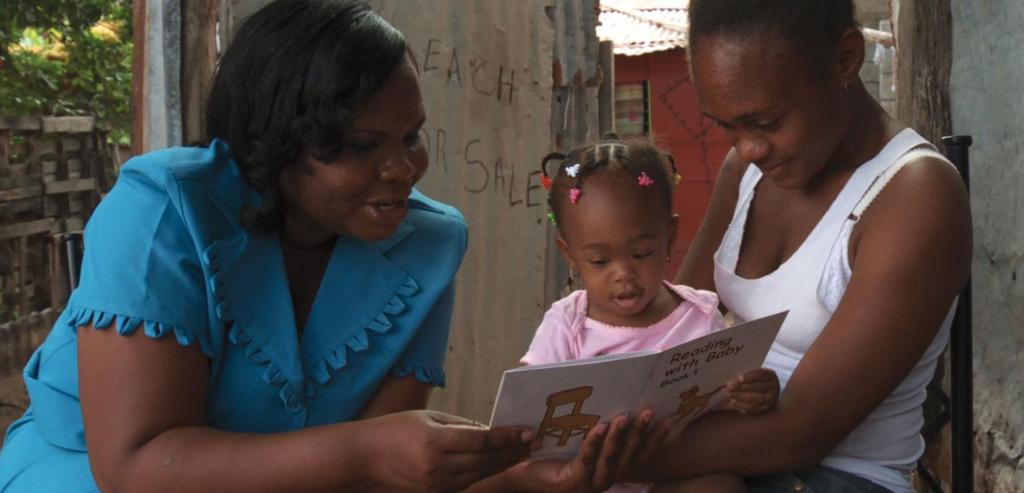
Great teachers focus not on compliance, but on connections & relationships
PJ Caposey in Education Week Teacher
The quality of academic, cognitive and social experiences during early childhood impacts brain development considerably (Walker, 2011). This developmentally sensitive period has long-term effects on adult functioning including emotional regulation, cognitive and psychosocial capabilities (Everson-Rose, Mendes de Leon, Bienias, Wilson & Evans, 2003). Early childhood education programmes are interventions to enhance child development outcomes, including reading, maths, grades, social interactions, wellbeing and mental health, employment, income and reduction of criminal behaviours (Walker, 2011). Examples of early childhood education programmes include parent training and preschool. There are many structural or procedural factors which enhance quality of programmes, including resource availability, schedule and the implementation of the curriculum. However making them all feasible and effective may be unattainable in low to middle income countries. The relationship is a low-cost, highly effective procedural intervention which enhances neuro-cognitive, emotional and social outcomes for the child (Maulik & Darmstadt, 2009). This blog therefore discusses the benefits of relationships within parent training and preschools for children aged 0-5 living in low and middle income countries. Such relationships occur between children, parents, teachers, home visitors and supervisors.
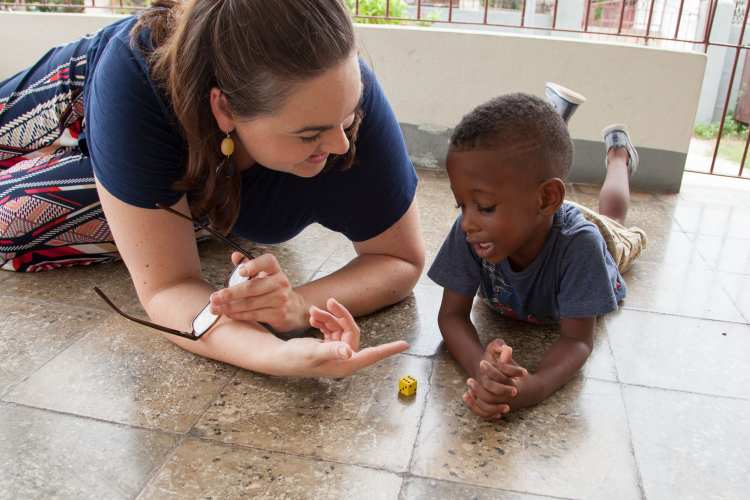
Child peer relationships
Preschool
Early experiences of social interaction in preschool have an important role in child social development (Arslan, Durmuşoğlu-Saltali, & Yilmaz, 2011). The ability to form and maintain healthy peer relationships is linked with wellbeing, emotional development, psychological adjustment and social competence (Arslan, Durmuşoğlu-Saltali, & Yilmaz, 2011). In addition, child attachments with peers is influenced by attachment style, with securely attached children developing healthy relationships with peers (Szewczyk-Sokolowski & Bost, 2005).
Home visits
Preschool may appear to have a more direct impact on child-child relationships due to the group setting. However, home visits may enhance emotional functioning, social competence and wellbeing (Hastings, Nuselovici, Rubin, & Cheah, 2010). An interaction of the childs relationship with their parent and the childs temperament also impacts their social development (Hastings, Nuselovici, Rubin, & Cheah, 2010). The relationship developed with parents, which is influenced by their temperament impacts how they interact with others in the future (Hastings, Nuselovici, Rubin, & Cheah, 2010). Home visits can support the development of this relationship through helping the parent with more effective responses to their childs behaviours (Moss et al., 2011).
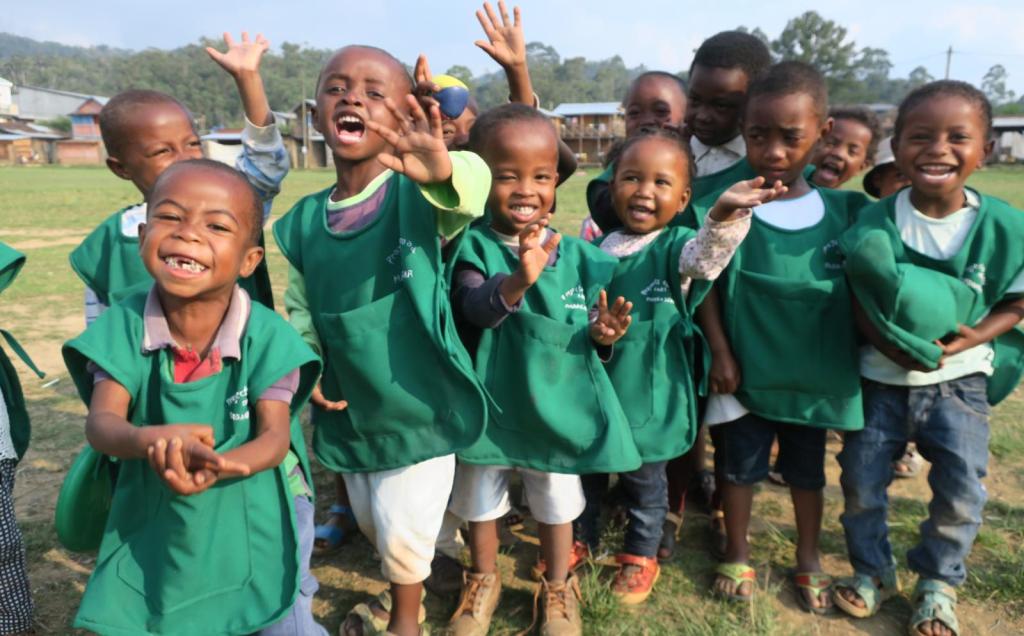
Mother-child relationship
Home visits
A highly effective method of enhancing child development outcomes is through promoting mother-child interaction. Home visits can advocate quality time between mother and baby in low and middle income countries (Cooper et al., 2009). This promotes healthy attachments, improved physical wellbeing, motivation, grade attainment and socio-emotional skills (Wechsler, Melnick, Maier, & Bishop, 2016). Home visits facilitating the relationship can also enhance parental confidence, wellbeing and ability to cope with stressors (Winston & Chicot, 2016).
The Incredible Years Teacher Training Programme is an evidence-based programme used in low to middle income counties. It is used to facilitate child-parent-teacher relationships to enhance child social, emotional and cognitive capabilities (Baker-Henningham, Scott, & Walker, 2012). The Incredible Years evidence based Parenting Programme supports parents to strengthen interactions with children and develop nurturing relationships (Baker-Henningham, Scott, & Walker, 2012).
Preschool
The parent-child relationship can also be improved through centre-based early childhood education in low and middle income countries. Teachers may provide parental support in how to promote child school commitment, promote consistency between home and school and parent-child relationships (Webster-Stratton, 2000). Certain programmes such as the Incredible Years Teacher Training Programme emphasises parental involvement in preschool, to improve child outcomes (Webster-Stratton, 2000).
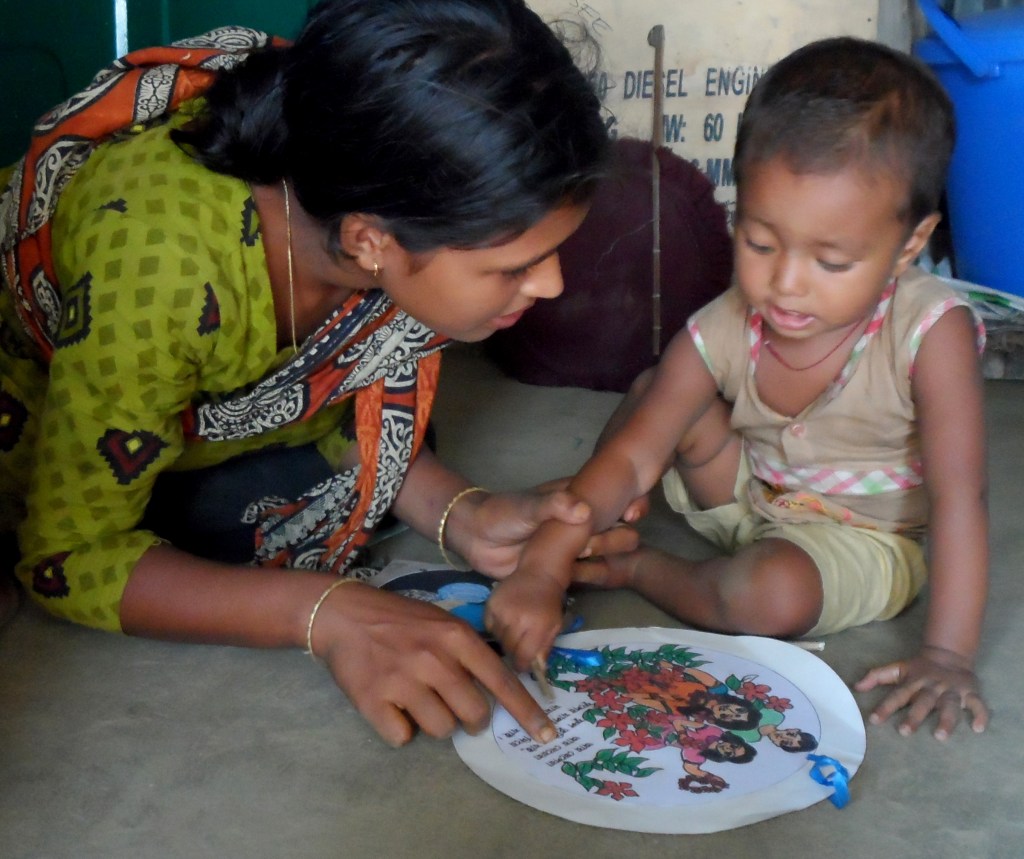
Staff-child relationship
Home visit
Home visitors relationship with children is crucial to outcomes, as their role is to develop supportive and trusting relationships with families. Poor home visitor-child relationships may decrease child engagement and lose trust of parents, hindering outcomes (Shanti, 2017). The child-staff relationship is facilitated through activities such as play, music and reading, which also promotes child neuro-cognitive functioning (Maulik & Darmstadt, 2009). The Incredible Years Teacher Training Programme offers training to home visitors, to strengthen relationships and improve child development (Baker-Henningham, Scott, & Walker, 2012).
Preschool
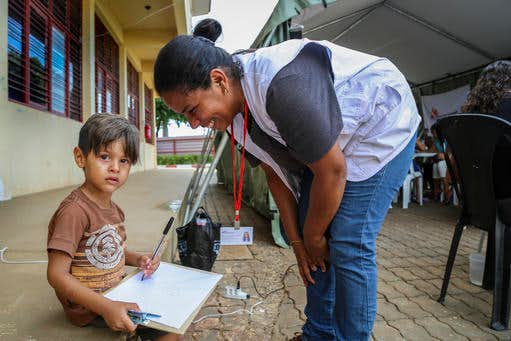
Teacher-child relationship facilitates child engagement, outcomes, cope with stressors and persevere (Yunus, Osman, & Ishak, 2011). Factors which enable or hinder the teacher-child relationship are summarised below (Chen & Phillips, 2018, Choi & Dobbs-Oates, 2016, Maleki et al., 2017, Woods, Lambert, Brown, Fincham, & May, 2015, Yoon, 2002).
Factors facilitating the teacher-child relationship
- Child social skills
- Child low internalising skills
- Teacher praise, acceptance, encouragement
- Higher child academic achievement
- Child motivation
- Teacher personal characteristics including self-efficacy, respect, trustworthiness and warmth
Factors hindering the teacher-child relationship
- Teacher negative affect
- Teacher stress (increased workload, insufficient training, lack of teacher support)
- Child conduct problems and disruptive behaviours
- Teacher-child conflict
- Teacher-parent conflict
The summary of literature appears to suggest that many enablers to positive teacher-child relationships are influenced by both teacher and child, whereas the barriers lie mainly with the teacher. This finding suggests that teacher training in developing an appropriate and safe relationship is crucial to enhance child outcomes. Programmes such as the Incredible Years Teacher Training Programme can enhance the skills necessary to manage the classroom, develop positive relationships and optimise child development (Baker-Henningham, Scott, & Walker, 2012).
Parent-staff relationship
Home visit
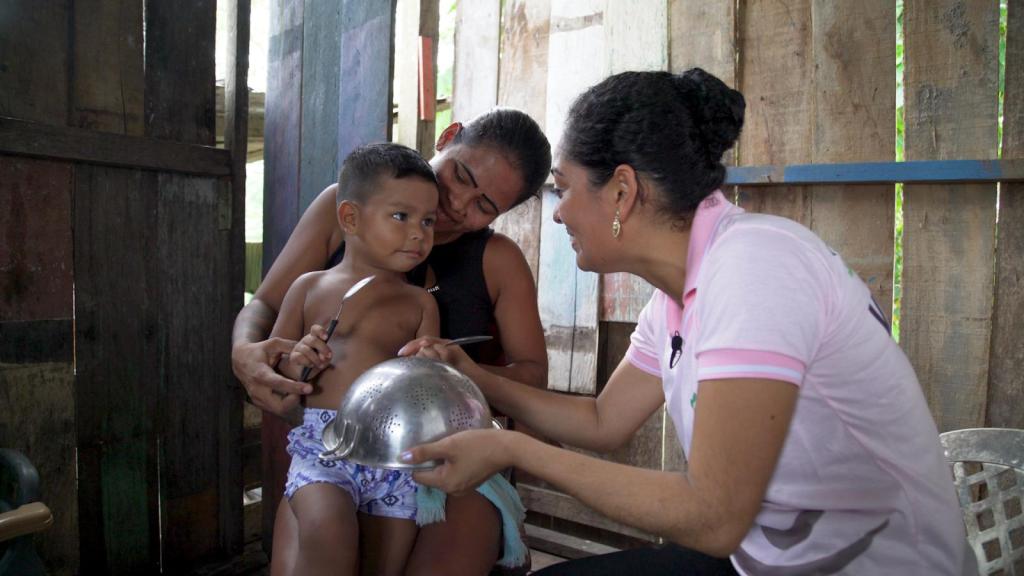
The working relationship between home visitors and parents is crucial to optimise outcomes (Shanti, 2017). A trusting, supportive and empathetic relationship enhances the likelihood of parent interaction and engagement (Mendez, 2010). Home visitors can facilitate the parent-child relationship, support the parent to engage in stimulating activities and improve their child development (Shanti, 2017). The Incredible Years Teacher Training programme emphasises the home visitor-parent relationship and supports home visitors through work with parents (Baker-Henningham, Scott, & Walker, 2012).
Preschool
Through promoting parent-staff relationships, more consistency can be maintained between approaches taken in home and school. Teachers may share their knowledge in the appropriate methods of promoting healthy behaviours, such as showing affection, praise and being proactive (Baker-Henningham, 2011). Maintaining positive relationships is a strategy used within both parents and teachers programmes offered in the Incredible Years Programme (Baker-Henningham, 2011). This relationship is crucial as parent-teacher relationship is linked to parental participation in interventions and child readiness (Mendez, 2010).
Summary
The interactive nature by which relationships develop means that different factors impact the child-parent-teacher-home visitor-supervisor relationships. This blog highlights many enablers for developing positive relationships in early childhood education programmes in low and middle income countries. This includes:
- Support for staff
- Child, parent, teacher wellbeing
- Knowledge of the importance of the relationship
- Warm, supportive, empathetic characteristics
- Equal, mutual, trusting relationships
- Additional support for problematic children
- Parental and child engagement
- Collaborative efforts towards childs education between supervision, parent and child
The relationship is a low-cost intervention which is empirically supported and widely implemented (Maulik & Darmstadt, 2009). The outcomes in terms of child development are countless, making it a crucial tool within interventions used in low and middle income counties. The Incredible Years Teacher Training Programme appears to be a holistic and effective method of facilitating the child-parent-teacher-supervisor relationship in low and middle income countries.
References
Arslan, E., Durmuşoğlu-Saltali, N., & Yilmaz, H. (2011). Social skills and emotional and behavioral traits of preschool children. Social Behavior and Personality: an international journal, 39(9), 1281-1287. DOI: https://doi.org/10.2224/sbp.2011.39.9.1281
Baker‐Henningham, H. (2011). Transporting evidence‐based interventions across cultures: using focus groups with teachers and parents of pre‐school children to inform the implementation of the Incredible Years Teacher Training Programme in Jamaica. Child: care, health and development, 37(5), 649-661. https://doi.org/10.1111/j.1365-2214.2011.01208.x
Baker-Henningham, H., Scott, S., Jones, K., & Walker, S. (2012). Reducing child conduct problems and promoting social skills in a middle-income country: cluster randomised controlled trial. The British Journal of Psychiatry, 201(2), 101-108. doi: 10.1192/bjp.bp.111.096834
Chen, S., & Phillips, B. (2018). Exploring teacher factors that influence teacher-child relationships in Head Start: A grounded theory. The Qualitative Report, 23(1), 80-97. Retrieved on 06/03/20. Retrieved from https://nsuworks.nova.edu/cgi/viewcontent.cgi?article=2962&context=tqr
Choi, J. Y., & Dobbs-Oates, J. (2016). Teacher-child relationships: Contribution of teacher and child characteristics. Journal of Research in Childhood Education, 30(1), 15-28. https://doi.org/10.1080/02568543.2015.1105331
Cooper, P., Tomlinson, M., Swartz, L., Landman, M., Molteno, C., Stein, A., McPherson, K., & Murray, L. (2009). Improving quality of mother-infant relationship and infant attachment in socioeconomically deprived community in South Africa: A randomized controlled trial. doi: https://doi.org/10.1136/bmj.b974
Everson-Rose, S. A., Mendes de Leon, C. F., Bienias, J. L., Wilson, R. S., & Evans, D. A. (2003). Early life conditions and cognitive functioning in later life. American journal of epidemiology, 158(11), 1083-1089. https://doi.org/10.1093/aje/kwg263
Hastings, P. D., Nuselovici, J. N., Rubin, K. H., & Cheah, C. S. (2010). Shyness, parenting, and parent-child relationships. The development of shyness and social withdrawal, 13, 107-130. Retrieved on 06/03/20. Retrieved from https://books.google.co.uk/books?hl=en&lr=&id=FDu7Y9tTbpYC&oi=fnd&pg=PA107&dq=child+relationships+with+other+children+in+preschool&ots=_3UooPPAXC&sig=-DiU7t4OnXL_LB-6eWQp3vUWaTA#v=onepage&q=child%20relationships%20with%20other%20children%20in%20preschool&f=false
Maleki, F., & Talaei, M. H. (2017). Investigating the Influence of Teachers’ Characteristics on the Teacher-Student Relations from Students’ Perspective at Ilam University of Medical Sciences. Journal of clinical and diagnostic research: JCDR, 11(6), JC04. doi: 10.7860/JCDR/2017/20109.10018
Maulik, P., Darmstadt, G. Community-based interventions to optimize early childhood development in low resource settings. J Perinatol 29, 531–542 (2009). https://doi.org/10.1038/jp.2009.42
Mendez, J. L. (2010). How can parents get involved in preschool? Barriers and engagement in education by ethnic minority parents of children attending Head Start. Cultural Diversity and Ethnic Minority Psychology, 16(1), 26. https://doi.org/10.1037/a0016258
Moss, E., Dubois-Comtois, K., Cyr, C., Tarabulsy, G. M., St-Laurent, D., & Bernier, A. (2011). Efficacy of a home-visiting intervention aimed at improving maternal sensitivity, child attachment, and behavioral outcomes for maltreated children: A randomized control trial. Development and psychopathology, 23(1), 195-210. DOI: https://doi.org/10.1017/S0954579410000738
Shanti, C. (2017). Engaging Parents in Early Head Start Home-Based Programs: How Do Home Visitors Do This?. Journal of evidence-informed social work, 14(5), 311-328. https://doi.org/10.1080/23761407.2017.1302858
Szewczyk‐Sokolowski, M., Bost, K. K., & Wainwright, A. B. (2005). Attachment, temperament, and preschool children’s peer acceptance. Social Development, 14(3), 379-397. https://doi.org/10.1111/j.1467-9507.2005.00307.x
Walker, S. (2011). Promoting equity through early child development interventions for children from birth through three years of age. No small matter: The impact of poverty, shocks, and human capital investment in early childhood development, 115-54. https://doi.org/10.1596/978-0-8213-8677-4
Webster-Stratton, C. (2000). The incredible years training series. US Department of Justice, Office of Justice Programs, Office of Juvenile Justice and Delinquency Prevention. Retrieved on 05/03/20. Retrieved from https://books.google.co.uk/books?hl=en&lr=&id=wnaCgCKk6owC&oi=fnd&pg=PA4&dq=Webster-Stratton,+C.+(2000)+The+Incredible+Years+Training+Series.+Office+of+Juvenile+Justice+and+Delinquency+Prevention,+Juvenile+Justice+Bulletin.&ots=mKlve-ipPI&sig=ZwnRVoP6NeMGYKGKs8d_7dhVoJI#v=onepage&q=Webster-Stratton%2C%20C.%20(2000)%20The%20Incredible%20Years%20Training%20Series.%20Office%20of%20Juvenile%20Justice%20and%20Delinquency%20Prevention%2C%20Juvenile%20Justice%20Bulletin.&f=false
Wechsler, M., Melnick, H., Maier, A., & Bishop, J. (2016). The building blocks of high-quality early childhood education programs. Palo Alto: Learning Policy Institute. Retrieved on 03/03/20. Retrieved from https://learningpolicyinstitute.org/sites/default/files/product-files/Building_Blocks_Early_Childhood_Education_04202016.pdf
Winston, R., & Chicot, R. (2016). The importance of early bonding on the long-term mental health and resilience of children. London journal of primary care, 8(1), 12-14. doi: 10.1080/17571472.2015.1133012
Woods, S., Lambert, N., Brown, P., Fincham, F., & May, R. (2015). “I’m so excited for you!” How an enthusiastic responding intervention enhances close relationships. Journal of Social and Personal Relationships, 32(1), 24-40.
S Yoon, J. (2002). Teacher characteristics as predictors of teacher-student relationships: Stress, negative affect, and self-efficacy. Social Behavior and Personality: an international journal, 30(5), 485-493. DOI:10.2224/sbp.2002.30.5.485
Yunus, M. M., Osman, W. S. W., & Ishak, N. M. (2011). Teacher-student relationship factor affecting motivation and academic achievement in ESL classroom. Procedia-Social and Behavioral Sciences, 15, 2637-2641. https://doi.org/10.1016/j.sbspro.2011.04.161
Zaslow, M., Anderson, R., Redd, Z., Wessel, J., Tarullo, L., & Burchinal, M. (2010). Quality Dosage, Thresholds, and Features in Early Childhood Settings: A Review of the Literature. OPRE Report 2011-5. Administration for Children & Families.
 Optimise Wellbeing during early childhood
Thank you for sharing your blog with me, there were so many interesting points made. I feel your introduction was concise and highlighted the importance of Early Childhood Education Programmes. I liked the way you spoke about factors that improve the quality of programmes. I found others including facilities and community support (Tikly, 2011). I really liked how you separated the quality measurements into factors like preschool and home visits, as to me, this shows how different they are from approaching and outcome. To support your point with regards to preschool child peer relationships, Dunsmore et al. (2008) found that child peer relationships can help children to manage emotions with the support of preschool, as preschool acts as an opportunity for children to build friendships and relationships. I like the way your blog mainly focused on relationships as an aspect, this suggests that relationships is a key factor to the quality of early childhood education programmes. Degotardi (2010) found that interactions between early childhood education practitioners improved stimulation in play and activities, which also suggests that when there are good teacher-child relationship, the child is more engaged and learning, which can be beneficial for many reasons including some of the reasons you’ve highlighted like trusting relationships, engagement and wellbeing. Additionally, it could be more motivating for staff and will reinforce them to build a good relationship or behave in this way again. Overall, this was a really positive blog which I felt highlighted the importance of relationships in ECEPs.
LikeLike