
The greatest threat to our planet is the belief that someone else will save it
Robert Swan
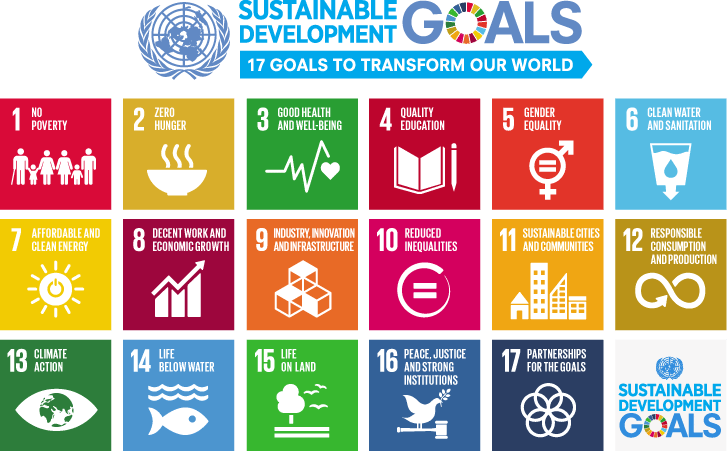
The rapidly increasing state of environmental deterioration, poverty and diminishing resources requires a collaborative effort to combine means, knowledge and effort. Sustainable development is the process of striving to achieve the needs of the present, without impairing the needs of future generations (The Brundtland Commission, 1987). In 2015, the United Nations General Assembly established 17 sustainable development goals focusing on areas such as poverty, hunger, and health and wellbeing (UN General Assembly, 2015). This blog focuses on the good health and wellbeing goal, which promotes physical and mental health across ages and countries. In 2019, the country achieving the worst sustainable development outcomes was the Central African Republic (Sachs, Schmidt-Traub, Kroll, Lafortune, & Fuller, 2019).
The human development report (2019) for the Central African Republic found that:
- 79% of the population live in poverty
- 46% have access to basic drinking water sources
- 25% have access to basic sanitation facilities
- 64% require humanitarian assistance
- 45% are food insecure
- 40% of children between 6 months and 5 years are stunted
- 94% are in vulnerable employment, with no fixed or guaranteed income
- There are only 10 hospital beds per 10,000 people
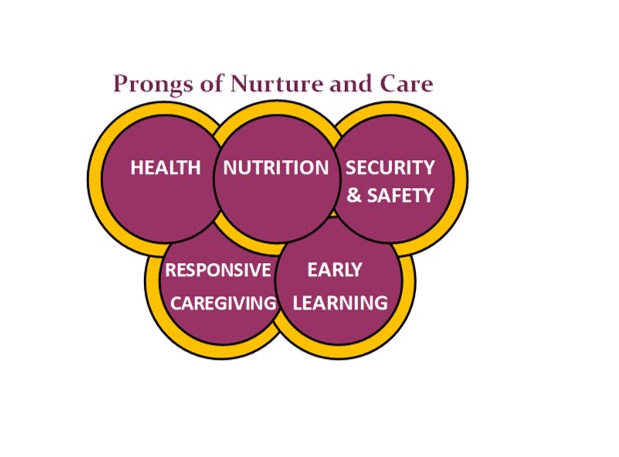
Cognitive, social and health experiences in early life are significant determinants of adult outcomes (Everson-Rose, Mendes de Leon, Bienias, Wilson & Evans, 2003). Early childhood programming can improve health and wellbeing through focusing attention on the five prongs of nurture and care. Health, nutrition, security and safety, responsive caregiving and early learning are all crucial to child health and wellbeing (World Health Organisation, 2018). The family, community and government can contribute to the five areas, to benefit child development (World Health Organisation, 2018).
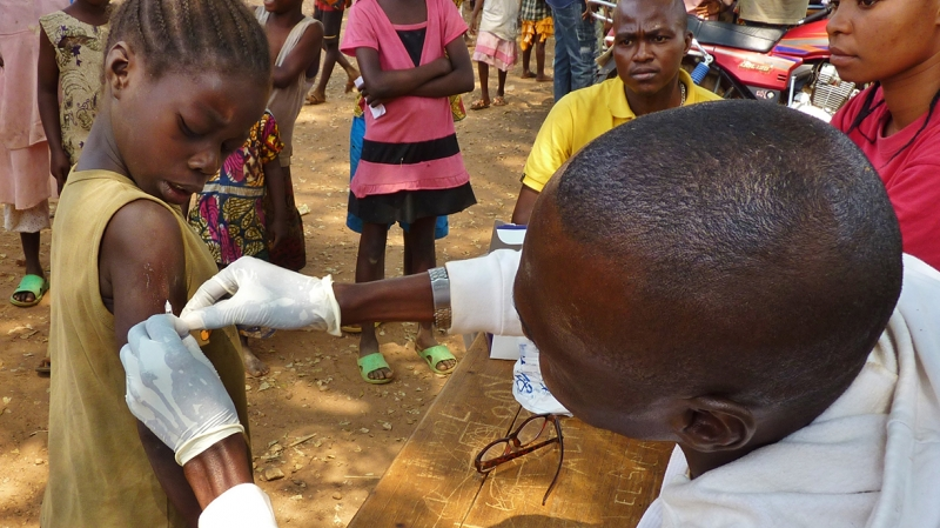
HEALTH conditions in the Central African Republic can be improved through increased immunisations, access to health centres, contraception and family planning. Immunisations are among the most successful and cost-effective health interventions, preventing an estimated 2-3 million deaths per year, and millions of other health issues (Unicef, 2018). Protecting children against diseases reduces preventable child deaths, epidemics, pressure on health care, the spread of contagious disease and poor development (Breiman et al., 2004).
Access to health care services is a global issue, with high demands going unmet (Potts, Myer, & Roberts, 2011). Individuals face long distances to hospitals and clinics, understaffing, and lack of resources and equipment (Potts, Myer, & Roberts, 2011). Access to healthcare is a human right, and investments may contribute to ending cycles of poverty, the spread of contagious disease and poor cognitive development (Unicef, 2018). Family planning services can prevent against unwanted pregnancy, the spread of sexually transmitted diseases and mortality (Alkema, Kantorova, Menozzi, & Biddlecom, 2013).
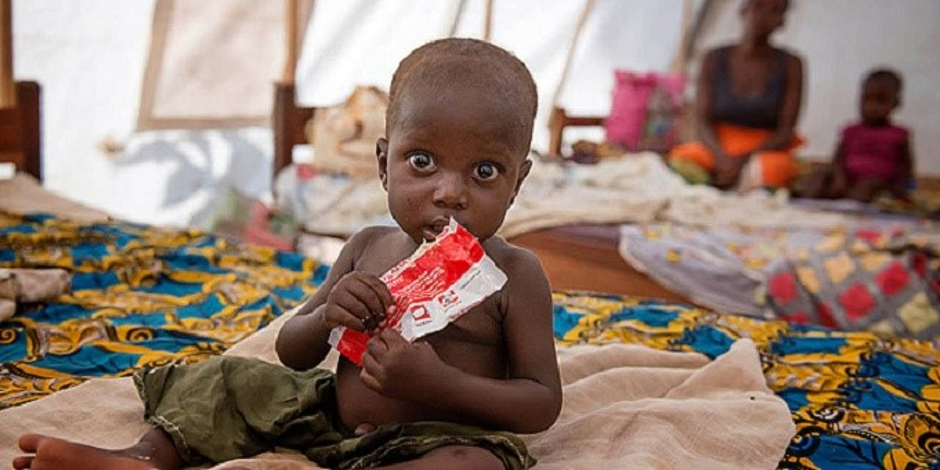
NUTRITION is crucial to a child’s cognitive development, impacting their ability to learn, and consequently their productivity and income (Unicef, 2018). Nutrition also impacts a child’s ability to grow physically, and their protection from disease and disaster (Unicef, 2018). Appropriate nutrition in early life can protect children from lifelong biological insults and ensure that they reach their full potential (Unicef, 2018). Micronutrient supplementation should be provided to families who have insufficient food, as well as the promotion of good feeding practices such as breastfeeding.
SAFETY AND SECURITY– Gastrointestinal diseases are high due to the lack of sanitation facilities and clean water (Unicef, 2013). 54% of households in the Central African Republic have access to drinking water and 35% practice open defecation (UN office, 2018). Increased access to sanitation facilities and clean water can reduce healthcare costs, reduce disease and epidemics (Sachs, Schmidt-Traub, Kroll, Lafortune, & Fuller, 2019).
Despite criminalisation of abuse and violence towards children under 15, offences often go unconvicted in the Central African Republic (CAR Human Rights Report, 2018). Children witness and experience violence, sexual assault, arson and even murder, often receiving no support (World Report, 2017). Such atrocities can impact child mental health, the intergenerational transmission of violence, and increased costs associated with the criminal justice system and rehabilitation services (Benjet, 2010; Widom & Wilson, 2015).
RESPONSIVE CAREGIVING enhances child wellbeing and mental health, and can be supported by professionals or para-professionals through home visits, health clinics and group sessions in the community. Caregiver mental health also impacts child wellbeing, mental health, birth weight, educational attainment, behavioural issues and employment (Bennett, Schott, Krutikova, & Behrman, 2016). Parents and children living in poverty are more at risk to mental health issues (Wickham, Whitehead, Taylor-Robinson, & Barr, 2017). The thinking healthy programme requires parents to work together to promote child health, and uses basic cognitive-behavioural therapy techniques (Rahman, Malik, Sikander, Roberts, & Creed, 2008). Parents with higher wellbeing model emotional responses, support child emotional development and provide an enabling environment through play, praise and quality interaction (Walker et al., 2006).
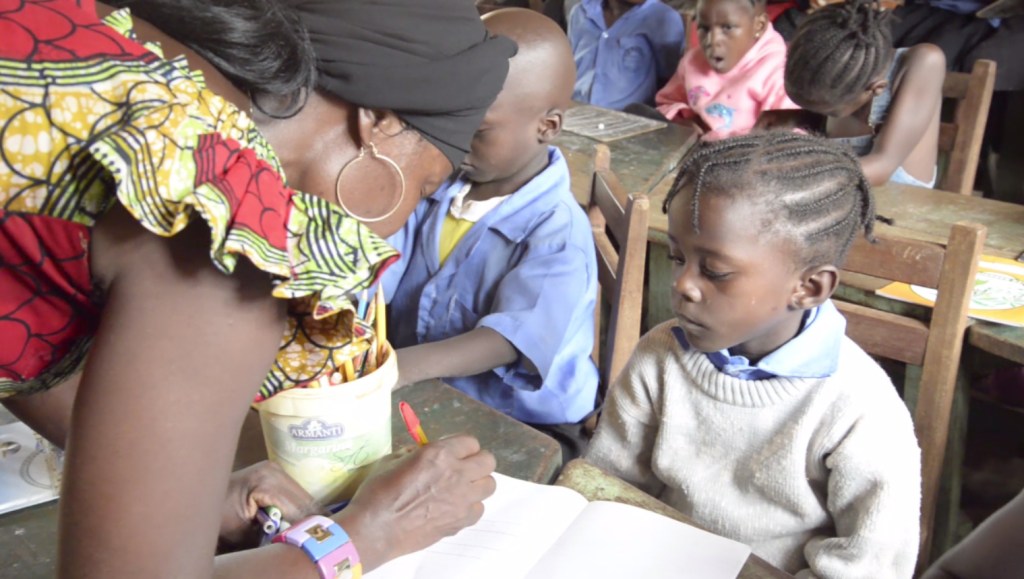
EARLY LEARNING- Preschool is the most cost-efficient investment with regards to adult outcomes, benefitting child cognitive and socio-emotional development (Unicef, 2018). However, early learning can also take place within the family, through home visits and with community-based programmes (World Health Organisation, 2018). Caregivers can be educated as to how to promote early learning in children through play activities, language development, enhanced relationship quality and opportunities to explore and learn. Education and learning in early life promotes development and cognitive performance, school attainment and economic growth, as shown in the graph (Walker et al., 2006).
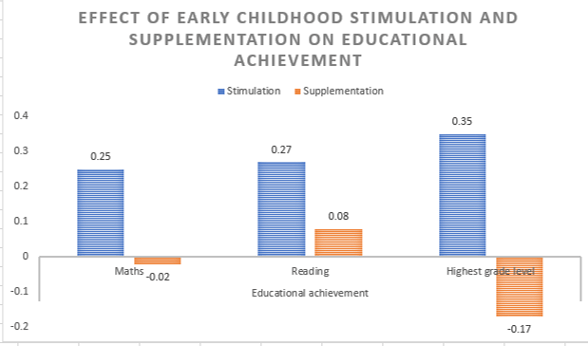
Summary- Children living in the Central African Republic are exposed to more risk factors as health insults are more common and resources are limited (Currie & Vogl, 2012). The biological risk factors result in adverse consequences including increased risk of disease, stunting, reduced life expectancy, delayed socio-emotional development and mortality (Martorell & Nguyen, 2010). Lack of stimulation, education and social interaction also impacts the process of developmental plasticity, causing cognitive and mental health disadvantages (Walker, Chang, Vera- Hernández, & Grantham-McGregor, 2011). The biological and environmental risk factors during childhood impact adult education, occupation, income, health and family foundation (Currie & Vogl, 2012).
Interventions taking place in early childhood, with the most at-risk children will have the most benefit as this period is most sensitive to change (Black et al., 2016). The prongs of nurture and care highlight how health is necessary but not sufficient to promoting physical and cognitive development (Walker et al., 2006). Through investing in immunisations, health centres, nutrition, protection from adversities, caregiving and early learning, risks can be reduced and competencies can be increased. Investing in early childhood programming will produce economic and social benefits, reducing the costs associated with healthcare, disease, criminal justice, unemployment and reducing the amount of people living in poverty (Asante, Prive, Hayen, Jan, & Wiseman, 2016).
References
Alkema, L., Kantorova, V., Menozzi, C., & Biddlecom, A. (2013). National, regional, and global rates and trends in contraceptive prevalence and unmet need for family planning between 1990 and 2015: a systematic and comprehensive analysis. The Lancet, 381(9878), 1642-1652. https://doi.org/10.1016/S0140-6736(12)62204-1
Asante, A., Price, J., Hayen, A., Jan, S., & Wiseman, V. (2016). Equity in health care financing in low-and middle-income countries: a systematic review of evidence from studies using benefit and financing incidence analyses. PloS one, 11(4). doi: 10.1371/journal.pone.0152866
Benjet, C. (2010). Childhood adversities of populations living in low-income countries: prevalence, characteristics, and mental health consequences. Current opinion in psychiatry, 23(4), 356-362. doi: 10.1097/YCO.0b013e32833ad79b
Bennett, I. M., Schott, W., Krutikova, S., & Behrman, J. R. (2016). Maternal mental health, and child growth and development, in four low-income and middle-income countries. J Epidemiol Community Health, 70(2), 168-173. doi:10.1136/jech-2014-205311
Black, M. M., Walker, S. P., Fernald, L. C., Andersen, C. T., DiGirolamo, A. M., Lu, C., McCoy, D. C., Fink, G., Shawar, Y. R., Shiffman, J., Devercelli, A. E., Wodon, Q. T., Vargas-Baron, & Grantham-McGregor. (2017). Early childhood development coming of age: science through the life course. The Lancet, 389(10064), 77-90. DOI: 10.1016/S0140-6736(16)31389-7
Breiman, R. F., Streatfield, P. K., Phelan, M., Shifa, N., Rashid, M., & Yunus, M. (2004). Effect of infant immunisation on childhood mortality in rural Bangladesh: analysis of health and demographic surveillance data. The Lancet, 364(9452), 2204-2211. https://doi.org/10.1016/S0140-6736(04)17593-4
Brundtland, G. H., Khalid, M., Agnelli, S., Al-Athel, S., & Chidzero, B. (1987). Our common future. New York, 8. Retrieved on 09/02/20. Retrieved from https://sustainabledevelopment.un.org/content/documents/5987our-common-future.pdf
Central African Republic Human Rights Report. (2018). Country Reports on Human Rights Practice. United States Department of State. Retrieved on 13/02/20. Retrieved from https://www.state.gov/wp-content/uploads/2019/03/Central-African-Republic-2018.pdf.
Currie, J., & Vogl, T. (2013). Early-life health and adult circumstance in developing countries. Annu. Rev. Econ., 5(1), 1-36. https://doi.org/10.1146/annurev-economics- 081412-103704
Everson-Rose, S. A., Mendes de Leon, C. F., Bienias, J. L., Wilson, R. S., & Evans, D. A. (2003). Early life conditions and cognitive functioning in later life. American journal of epidemiology, 158(11), 1083-1089. https://doi.org/10.1093/aje/kwg263
Human Development Report. (2019). Beyond income, beyond averages, beyond today: Inequalities in human development in the 21st century. United Nations Development Programme: New York. Retrieved on 10/02/20. Retrieved from http://hdr.undp.org/sites/default/files/hdr2019.pdf
Martorell, R., & Nguyen, P. (2010). Interrelationship between growth and development in low and middle income countries. In Importance of Growth for Health and Development, 65, 99-121. Karger Publishers. Retrieved on 11/02/20. Retrieved from https://www.researchgate.net/profile/Richard_Cooke4/publication/41414189_Postnatal_Growth_and_Development_in_the_Preterm_and_Small_for_Gestational_Age_Infant/links/02e7e5346812d204c2000000.pdf#page=21
Potts, A., Myer, K., & Roberts, L. (2011). Measuring human rights violations in a conflict-affected country: results from a nationwide cluster survey in Central African Republic. Conflict and health, 5(1), 4. doi: 10.1186/1752-1505-5-4
Rahman, A., Malik, A., Sikander, S., Roberts, C., & Creed, F. (2008). Cognitive behaviour therapy-based intervention by community health workers for mothers with depression and their infants in rural Pakistan: a cluster-randomised controlled trial. The Lancet, 372(9642), 902-909. https://doi.org/10.1111/j.1365-3156.2008.02036.x
Sachs, J., Schmidt-Traub, G., Kroll, C., Lafortune, G., & Fuller, G. (2019). Sustainable development report 2019. Bertelsmann Stiftung and Sustainable Development Solutions Network (SDSN): New York, NY, USA. Retrieved on 09/02/20. Retrieved from https://s3.amazonaws.com/sustainabledevelopment.report/2019/2019_sustainable_development_report.pdf.
UN General Assembly. (2015). Transforming our world : the 2030 Agenda for Sustainable Development. A/RES/70/1. Retrieved on 10/02/20. Retrieved from https://www.refworld.org/docid/57b6e3e44.html.
UN office for the Coordination of Humanitarian Affairs. (2018). Central African Republic Humanitarian Fund Annual Report. Retrieved on 12/02/20. Retrieved from https://www.unocha.org/sites/unocha/files/CAR%20HF%20Annual%20Report%202018.pdf
Unicef. (2016). UNICEF Annual Report. Central African Republic. Retrieved on 12/02/20. Retrieved from https://www.unicef.org/about/annualreport/files/Central_African_Republic_2016_COAR.pdf
Unicef. (2018). Progress for every child in the SDG era. Division of Data, Research and Policy. Retrieved on 09/02/20. Retrieved from file:///C:/Users/USER/Downloads/Progress_for_Every_Child_V4.pdf
Walker, S. P., Chang, S. M., Powell, C. A., Simonoff, E., & Grantham-McGregor, S. M. (2006). Effects of psychosocial stimulation and dietary supplementation in early childhood on psychosocial functioning in late adolescence: follow-up of randomised controlled trial. Bmj, 333(7566), 472. doi: https://doi.org/10.1136/bmj.38897.555208.2F
Walker, S. P., Chang, S. M., Vera-Hernández, M., & Grantham-McGregor, S. (2011). Early childhood stimulation benefits adult competence and reduces violent behavior. Pediatrics, 127(5), 849-857. DOI: https://doi.org/10.1542/peds.2010-2231
Wickham, S., Whitehead, M., Taylor-Robinson, D., & Barr, B. (2017). The effect of a transition into poverty on child and maternal mental health: a longitudinal analysis of the UK Millennium Cohort Study. The Lancet Public Health, 2(3), e141-e148. https://doi.org/10.1016/S2468-2667(17)30011-7
Widom, C. S., & Wilson, H. W. (2015). Intergenerational transmission of violence. In Violence and mental health (pp. 27-45). Springer, Dordrecht. https://doi.org/10.1007/978-94-017-8999-8_2
World Report. (2017). Central African Republic, Events of 2017. Retrieved on 13/03/30. Retrieved from https://www.hrw.org/world-report/2018/country-chapters/central-african-republic.
World Health Organisation. (2014). Central African Republic. Fact Sheet: Emergency Risk and Crisis Management. Retrieved on 10/02/20. Retrieved from https://www.who.int/hac/crises/caf/sitreps/central_african_republic_country_fact_sheet_march2014.pdf
World Health Organisation. (2018). Nurturing care for early childhood development. A global framework for action and results. WHO, UNICEF. Retrieved on 11/02/20. Retrieved from https://www.who.int/maternal_child_adolescent/child/nurturing-care-framework-first-draft.pdf
 Optimise Wellbeing during early childhood